Description
Internal Family Systems
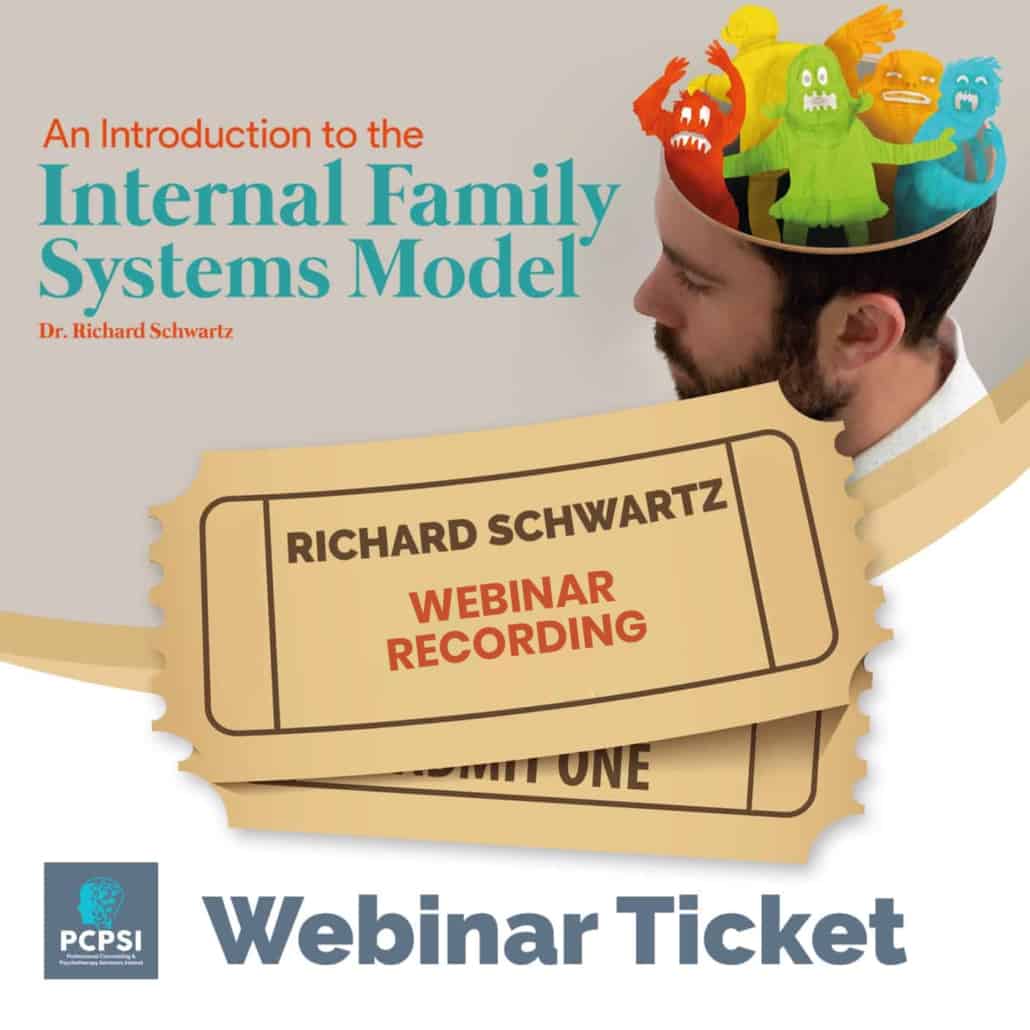
The Internal Family Systems (IFS) model was developed by Dr. Richard Schwartz, Ph.D., over the past 30 years as he learned to set aside his trained assumptions and truly listen to his clients. It is a highly efficient and effective way of guiding clients to a state of inner clarity and compassion, the Self, from which they know how to heal themselves. From the Self, clients are able to calm and transform their troubling inner voices, the critical and anxious chatter, the compulsive distractions, their feelings of vulnerability, inadequacy, and overwhelm. These parts of the psyche are surprisingly responsive and resilient when addressed with respect and patience. They readily forsake their inner battles, and take on valuable inner roles once they are accepted and witnessed.
This application of family systems principles and techniques to inner systems is now widely used internationally in the treatment of trauma and severe diagnoses, as well as in non-clinical applications such as business consulting and meditation practice. IFS offers a way for therapists to make their practice more enjoyable and effective, and less effortful. It also helps them find and heal parts of themselves.
For clients, the healing and reorienting of their “inner families” in an environment of genuine acceptance, translates into concrete behavioral change, plus improved ability to relate well to people. IFS is a gentle, yet powerful, healing delivery system that releases the therapist from the need to be clever because it trusts and empowers the clients’ Self.
Learning Objectives
By the end of this introductory recorded series participants will be able to:
1. Review the history and development of the Internal Family Systems model of therapy.
2. Explore and discuss the basic assumptions of IFS in regard to non-pathological multiplicity of mind and the concept of “SELF”.
3. Be introduced to and review the goals of IFS Therapy.
4. Understand the concept of releasing uncomfortable feelings and beliefs which allows harmony and balance in the inner system.
5. Review and have a general knowledge of the 3 categories of sub-personalities that most often present in therapy: Manager parts, Firefighter parts, Exiled parts.
6. Learn the dynamics of the three group system.
7. Review the IFS concept of SELF and its role and effectiveness as a leader in the system.
8. Discuss and identify the qualities of SELF: curiosity, compassion, confidence, courage, clarity, creativity, connectedness, calmness.
9. Review the power of working with the client¹s Self in therapy.
10. Discuss the benefits of IFS therapy.
11. Explore and discuss the therapeutic relationship as it applies to the IFS therapist.
12. Discuss, review and clarify material covered during the workshop.
About the speaker
Richard Schwartz earned his Ph.D. in Marriage and Family Therapy from Purdue University, after which he began a long association with the Institute for Juvenile Research at the University of Illinois at Chicago, and more recently at The Family Institute at Northwestern University, attaining the status of Associate Professor at both institutions. He is coauthor, with Michael Nichols, of Family Therapy: Concepts and Methods, the most widely used family therapy text in the United States.